










Our capabilities are growing. Tell us how we can help you.
How to Choose the Right Contract Electronics Manufacturer (CEM)
Choosing the right Contract Electronics Manufacturer (CEM) is one of the most important decisions an electronics business can make. Whether developing a new product, scaling manufacturing or reviewing an existing supply chain, the right manufacturing partner can have a major impact on product quality, production efficiency, long-term reliability and overall commercial success.
A strong electronics manufacturing partner does far more than simply assemble circuit boards. The best contract electronics manufacturers support engineering collaboration, Design for Manufacture (DFM), testing, inspection, supply chain management and long-term production continuity throughout the entire product lifecycle.
For companies developing electronic products, selecting the wrong manufacturing partner can lead to delays, inconsistent quality, communication issues, supply chain disruption and costly redesigns.
This guide explains what to look for when choosing a contract electronics manufacturer and why manufacturing capability, engineering expertise and long-term support are often more important than simply choosing the lowest-cost supplier.
Contents
- What Is a Contract Electronics Manufacturer (CEM)?
- Why Choosing the Right CEM Matters
- Key Things to Look for in a Contract Electronics Manufacturer
- Warning Signs When Choosing a Contract Electronics Manufacturer
- Can Your CEM Support Prototype to Production Manufacturing?
- Why Testing & Inspection Capability Matters
- How Modern Electronics Manufacturing Is Changing
- The Risks of Choosing a CEM Based on Cost Alone
- UK vs Overseas Electronics Manufacturing
- Questions to Ask a Contract Electronics Manufacturer
- Why Long-Term Manufacturing Partnerships Matter
- Choosing the Right Electronics Manufacturing Partner
- Contract Electronics Manufacturer (CEM) Frequently Asked Questions
What Is a Contract Electronics Manufacturer (CEM)?
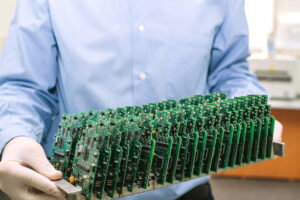
A contract electronics manufacturer (CEM) produces PCB assemblies and electronic products on behalf of OEM customers.
A Contract Electronics Manufacturer (CEM) is a company that provides outsourced electronics manufacturing services for OEMs, product developers and technology businesses.
CEM providers typically support services including:
- PCB assembly
- Electronic assembly
- PCB prototyping
- Product testing
- Inspection and validation
- Cable assembly
- Box build integration
- Production manufacturing
- Supply chain management
Some manufacturers may also describe themselves as Electronics Manufacturing Services (EMS) providers. In many cases, the terms CEM and EMS are used interchangeably within the electronics manufacturing industry.
Modern contract electronics manufacturers often support the full manufacturing lifecycle — from prototype PCB assembly through to full production manufacture and long-term product support.
Why Choosing the Right CEM Matters
Choosing the right electronics manufacturing partner can influence far more than manufacturing costs alone.
A reliable CEM helps support:
- Product quality and consistency
- Manufacturing efficiency
- Faster product development
- Supply chain resilience
- Testing and inspection capability
- Scalability into production manufacture
- Long-term manufacturing continuity
In contrast, selecting the wrong manufacturing partner can result in:
- Delayed production schedules
- PCB assembly quality issues
- Supply chain disruption
- Increased redesign costs
- Limited manufacturing flexibility
- Communication difficulties
- Poor production scalability
For many businesses, electronics manufacturing becomes a long-term partnership rather than a simple supplier relationship. This makes technical capability, communication and manufacturing reliability critically important.
Key Things to Look for in a Contract Electronics Manufacturer
Not all contract electronics manufacturers offer the same level of engineering support, manufacturing capability or inspection processes.
When evaluating a CEM partner, there are several key areas that should be carefully considered.
Engineering Support & Technical Expertise
A strong electronics manufacturing partner should provide more than production capability alone.
Engineering support is essential during:
- Product development
- PCB prototyping
- Design refinement
- Manufacturing readiness
- Production scaling
Manufacturers with in-house engineering expertise can help identify manufacturability concerns early, reducing production risks and improving long-term reliability.
PCB design services should also support Design for Manufacture (DFM) principles to improve long-term production efficiency and manufacturing consistency.
A manufacturer with practical engineering knowledge can often help improve product reliability before production begins.
Prototype to Production Capability
Many electronic products begin with prototype PCB assembly before moving into low-volume or full-scale production manufacturing.
Choosing a contract electronics manufacturer that can support both prototype development and production manufacture helps improve continuity throughout the product lifecycle.
PCB prototyping services help validate manufacturability, functionality and assembly requirements before production manufacture begins.
A fully integrated manufacturing partner can help support:
- Prototype PCB assembly
- Low-volume manufacturing
- Pilot production runs
- Production scaling
- Long-term manufacturing support
This reduces supplier complexity while helping maintain manufacturing consistency throughout development and production.
Testing & Inspection Capability
Testing and inspection capability is one of the most important areas to evaluate when selecting a CEM.
Reliable manufacturers should provide robust inspection and validation processes designed to identify potential manufacturing defects before products reach deployment.
Capabilities may include:
- Functional product testing
- Flying probe testing
- X-ray inspection
- Visual inspection
- Electrical testing
- Manufacturing validation
- Traceability processes
- Advanced X-ray inspection services support hidden solder joint analysis and detailed PCB assembly inspection for complex electronic products.
- Integrated product testing services support manufacturing validation, product reliability and long-term production consistency.
In many cases, manufacturing issues are only discovered once products reach deployment or field use. Robust inspection and testing processes help identify potential defects earlier, reducing reliability risks, warranty issues and costly product failures later in the product lifecycle.
Manufacturing traceability and documented quality processes are also important considerations when selecting a contract electronics manufacturing partner.
Testing capability not only supports product quality but also helps reduce long-term reliability risks and costly field failures.
Supply Chain & Component Management
Component sourcing and supply chain management have become increasingly important within electronics manufacturing.
A reliable contract electronics manufacturer should have strong processes for:
- Component sourcing
- Supply chain visibility
- Obsolescence management
- Approved supplier management
- Inventory control
- Production continuity planning
Experienced electronics manufacturers should also support component lifecycle and obsolescence management to help minimise future supply chain disruption.
Effective supply chain management helps reduce disruption risks while supporting stable long-term manufacturing operations.
Certifications & Industry Standards
Quality certifications and compliance standards can provide valuable insight into a manufacturer’s processes, quality systems and operational maturity.
Depending on the industries supported, important certifications and standards may include:
- ISO 9001
- ISO 14001
- ISO 13485
- IPC standards
- RISQS
- JOSCAR
- Cyber Essentials
Recognised industry frameworks such as IPC industry standards help support manufacturing consistency, PCB assembly quality and inspection processes across the electronics manufacturing sector.
Structured quality systems such as ISO 9001 quality management standards also demonstrate a manufacturer’s commitment to documented quality processes, continuous improvement and operational consistency.
For many OEMs and technology businesses, cybersecurity is also becoming increasingly important when selecting a manufacturing partner. Certifications such as Cyber Essentials can help demonstrate a manufacturer’s approach to cybersecurity and operational protection.
These standards demonstrate structured quality management, manufacturing consistency and compliance capability across regulated industries.
Manufacturing Capacity & Scalability
Manufacturing requirements often evolve over time.
A suitable CEM should be capable of supporting:
- Prototype manufacturing
- Low-volume production
- Production scaling
- Long-term manufacturing growth
Manufacturers investing in production facilities, inspection systems and manufacturing technology are often better positioned to support long-term customer requirements.
Recent investment in manufacturing expansion, automated inspection capability and advanced production equipment can also demonstrate a commitment to future manufacturing support and operational scalability.
Communication & Responsiveness
Communication is frequently overlooked when selecting an electronics manufacturing partner, yet it often becomes one of the most important factors within long-term manufacturing relationships.
Responsive communication supports:
- Faster issue resolution
- Improved production visibility
- Better engineering collaboration
- More efficient project management
- Reduced manufacturing delays
A collaborative manufacturing relationship can significantly improve development efficiency and long-term production outcomes.
Manufacturers supporting close engineering collaboration during product development and production scaling often provide greater flexibility and long-term operational support.
Long-Term Stability & Manufacturing Continuity
Long-term manufacturing continuity is particularly important for products requiring ongoing support, repeat production or long operational lifecycles.
When evaluating a contract electronics manufacturer, businesses should consider:
- Company stability
- Manufacturing investment
- Engineering capability
- Long-term growth strategy
- Employee expertise
- Production continuity
A stable manufacturing partner helps reduce long-term operational and supply chain risks.
Manufacturers that continue investing in production capability, inspection technology and engineering expertise are often better positioned to support long-term customer requirements.
Warning Signs When Choosing a Contract Electronics Manufacturer
Not all electronics manufacturing providers offer the same level of quality, engineering capability or long-term manufacturing support.
Potential warning signs may include:
- Limited testing and inspection capability
- Poor communication during project discussions
- Minimal engineering support
- Lack of Design for Manufacture (DFM) input
- Outdated manufacturing equipment
- Limited scalability from prototype to production
- Weak manufacturing traceability processes
- Poor supply chain visibility
- Limited certifications or compliance standards
- Inconsistent lead times or production planning
Manufacturers unable to support engineering collaboration, testing or long-term production continuity may create additional operational risks later in the product lifecycle.
Choosing a manufacturing partner should involve evaluating overall capability, reliability and long-term suitability — not simply comparing initial production pricing.
Can Your CEM Support Prototype to Production Manufacturing?
One of the most important questions to ask any contract electronics manufacturer is whether they can support products from prototype development through to full production manufacturing.
Prototype PCB assembly is often only the first stage of the product lifecycle.
As products evolve, manufacturers may require support for:
- Product refinement
- Manufacturing readiness
- Testing and validation
- Low-volume manufacturing
- Production scaling
- Ongoing production support
Using separate suppliers for prototyping, testing and production can create additional complexity and increase the risk of communication issues or manufacturing inconsistencies.
An integrated electronics manufacturing partner can help streamline this process while improving long-term production continuity.
Why Testing & Inspection Capability Matters
Inspection and testing processes play a critical role in ensuring manufacturing quality and long-term product reliability.
Modern electronic assemblies are becoming increasingly compact and complex, making advanced inspection capability more important than ever.
Contract electronics manufacturers offering integrated inspection capability may support:
- Automated inspection processes
- X-ray inspection technology
- Flying probe testing
- Functional testing
- Product validation
- Manufacturing verification
- Traceability systems
Advanced inspection capability helps identify potential manufacturing defects earlier while improving production consistency and reducing field reliability risks.
For high-reliability industries such as rail, industrial electronics and medical technology, robust testing and inspection capability is often essential.
Conformal coating services may also be important for products operating within harsh, high-moisture or contamination-prone environments where long-term PCB protection is required.
How Modern Electronics Manufacturing Is Changing
The electronics manufacturing industry continues to evolve rapidly as products become more advanced, supply chains become more complex and quality expectations continue to increase.
Modern electronics manufacturing increasingly requires:
- Greater manufacturing traceability
- Faster prototype development
- Improved supply chain resilience
- Higher inspection standards
- Greater production flexibility
- Increased engineering collaboration
- Advanced manufacturing validation
Many OEMs are also reviewing the long-term benefits of UK electronics manufacturing due to increasing concerns around global supply chain disruption, lead times and production visibility.
As electronic products become more complex, manufacturers investing in inspection technology, engineering support and integrated manufacturing capability are becoming increasingly important within modern electronics production environments.
Organisations such as Make UK continue to highlight the growing importance of resilient UK manufacturing capability and long-term production stability.
The Risks of Choosing a CEM Based on Cost Alone
While manufacturing cost is always an important consideration, selecting a contract electronics manufacturer based purely on price can create significant long-term risks.
Low-cost manufacturing solutions may sometimes result in:
- Reduced quality control
- Limited testing capability
- Poor communication
- Supply chain instability
- Delayed lead times
- Increased redesign requirements
- Lower manufacturing flexibility
In many cases, the true cost of manufacturing problems becomes far greater than the initial production savings. A reliable manufacturing partner should instead provide long-term value through quality, consistency, engineering support and manufacturing reliability.
For complex electronic products, engineering collaboration and manufacturing quality often become far more valuable than short-term production cost savings.
UK vs Overseas Electronics Manufacturing
For many OEMs and technology businesses, the decision between UK electronics manufacturing and overseas production remains an important consideration.
While overseas manufacturing may sometimes offer lower initial production costs, UK-based electronics manufacturing can provide several operational advantages including:
- Improved communication
- Faster lead times
- Easier engineering collaboration
- Better production visibility
- Reduced supply chain risk
- Simplified logistics
- Faster issue resolution
For products requiring ongoing engineering collaboration, testing, prototyping or long-term manufacturing flexibility, working with a UK electronics manufacturer can often provide significant operational benefits.
The ability to work closely with engineering and manufacturing teams can also help improve product quality and development efficiency throughout the product lifecycle.
For many businesses, UK manufacturing also supports improved supply chain resilience and greater production oversight compared to overseas manufacturing models.
Questions to Ask a Contract Electronics Manufacturer
Before selecting a manufacturing partner, businesses should carefully evaluate both technical capability and long-term operational suitability.
Important questions may include:
- Can you support prototype to production manufacturing?
- What testing and inspection capabilities do you offer?
- Do you provide PCB prototyping services?
- What industries do you currently support?
- How do you manage component sourcing and supply chain challenges?
- What certifications and standards do you hold?
- Can you support low-volume and production manufacturing?
- What engineering support is available during development?
- How do you manage manufacturing quality and traceability?
- Do you support Design for Manufacture (DFM)?
These questions help provide a clearer understanding of a manufacturer’s technical capability, quality systems and long-term suitability.
Why Long-Term Manufacturing Partnerships Matter
The strongest electronics manufacturing relationships are typically built over many years.
Long-term manufacturing partnerships help support:
- Improved product understanding
- Better communication
- Manufacturing continuity
- More efficient production scaling
- Faster issue resolution
- Long-term engineering collaboration
Manufacturers that continually invest in engineering capability, inspection technology and production infrastructure are often better positioned to support customers over the long term.
For businesses developing complex electronic products, choosing a manufacturing partner with long-term stability, ongoing investment and manufacturing expertise can provide significant operational advantages.
Choosing the Right Electronics Manufacturing Partner
Selecting the right contract electronics manufacturer is about far more than comparing production costs.
The best manufacturing partnerships are built around engineering expertise, manufacturing quality, communication, inspection capability and long-term reliability.
A strong CEM partner should support not only PCB assembly and production manufacture, but also product development, testing, inspection and long-term manufacturing continuity throughout the entire product lifecycle.
For companies developing electronic products, investing time into selecting the right manufacturing partner can help improve product quality, reduce production risks and support long-term manufacturing success.
Contract Electronics Manufacturer (CEM) Frequently Asked Questions
What does a contract electronics manufacturer do?
A contract electronics manufacturer (CEM) provides outsourced electronics manufacturing services including PCB assembly, prototype manufacturing, testing, inspection and production support for electronic products and assemblies.
What is the difference between EMS and CEM?
EMS (Electronics Manufacturing Services) and CEM (Contract Electronics Manufacturing) are often used interchangeably within the electronics manufacturing industry. Both terms typically refer to companies providing outsourced electronics manufacturing and PCB assembly services.
What should I look for in a PCB assembly company?
When choosing a PCB assembly company, important factors include engineering support, testing capability, manufacturing quality systems, supply chain management, certifications, production scalability and long-term manufacturing reliability.
Can a CEM support prototype to production manufacturing?
Yes. Many contract electronics manufacturers support the full product lifecycle from prototype PCB assembly and low-volume manufacturing through to full production manufacture and long-term production support.
Why is testing important in electronics manufacturing?
Testing helps validate manufacturing quality, identify defects and improve long-term product reliability. Common testing processes include functional testing, flying probe testing and X-ray inspection.
Is UK electronics manufacturing better than overseas manufacturing?
UK electronics manufacturing can provide advantages including improved communication, faster lead times, easier engineering collaboration, reduced supply chain risk and greater manufacturing visibility compared to some overseas production models.
Enquire about Electronic Assembly
0161 626 4117